“Playground etiquette… What is that anyway?”
That question recently came up after a particularly draining ten-day “spring break” full of solo parenting. After graduating myself to taking my 2- and 5-year-olds to a public park, where I quickly discovered I have zero zone defense skills, I found myself witnessing an unexpected lesson in parenting patterns.
Here’s the scene: My boys were immediately drawn to a “truck-a-palooza” of seven large dump trucks brought by a 4-year-old and his father, a man whose head was firmly entrenched in a TikTok rabbit hole. The dad gave a passive nod to sharing, and for a glorious 120 seconds, there was harmony. Then, the 4-year-old felt “some type of way” about sharing, reclaimed his toys, and my 2-year-old launched into a full-scale tantrum.
When I finally managed to return a retrieved truck, the father offered a passive, “Two is a tough age”.
While that moment had me ready for an ice tea, it highlights a critical concept we explore with parents at Be Well Therapy Collective: Reinforcement Patterns.
The Problem of Passive Parenting and Unintentional Reinforcement
In that moment, the “TikTok Dad” reinforced a pattern for his child—and himself—not by actively teaching, but by passively disengaging.
Parenting often operates on the simple, powerful psychological principle of reinforcement: actions that are rewarded continue, and actions that are ignored or avoided can also have unintended reinforcing effects.
Here is what was unintentionally reinforced at the park:
- For the Child (age 4): By retreating to his phone after the brief moment of peace, the father avoided the difficulty of his child’s discomfort and negotiation. The child learned that if they escalate their feelings of possessiveness, the difficult situation (sharing) is removed or ignored. This reinforces the child’s belief that they don’t have to tolerate hard feelings in a shared space.
- For the Parent (The “Tiktok Dad”): When his child started to get upset, he was able to avoid the emotional labor of co-regulating the child’s feelings, which allowed him to return to his phone. This lack of intervention was negatively reinforcing for the dad—the immediate stressor (the crying/conflict) was avoided by disengaging. This reinforces the long-term pattern of non-engagement and low emotional availability.
Three Ways to Shift Reinforcement Patterns
The ultimate frustration from the encounter was that the dad missed two vital opportunities: to set a boundary before the conflict, and to follow through during the conflict. If you find yourself repeatedly stuck in the same challenging parenting moment, try shifting your focus to these three areas:
1. Establish the Antecedent (Set the Stage for Success): As the playground anecdote highlights, the golden rule of park etiquette should be established before you even leave the house. The “antecedent” is the environmental setup that precedes the behavior.
- Try This: Before entering a shared space, set a clear rule: “We are bringing the ball, and if other children ask to play, we will say yes, or the ball will go back in the bag.” Setting the boundary upfront makes the behavior non-negotiable and provides a simple consequence.
2. Focus on the Process (Instead of the Content): When a boundary is tested and a child throws a tantrum, the natural reaction is to distract or bribe for immediate peace—exactly what I tried with my two-year-old. However, as therapists, we look for what is underneath the behavior. Tantrums, hoarding, or avoidance are often expressions of deeper feelings or “stuck” emotions.
- Try This: Instead of simply trying to solve the problem (give the toy, take the toy), acknowledge the feeling first. “I see how angry you are that he won’t let you play with that truck. That is a very tough feeling”. Slowing down the experience helps them integrate and validate the emotion, rather than avoiding it.
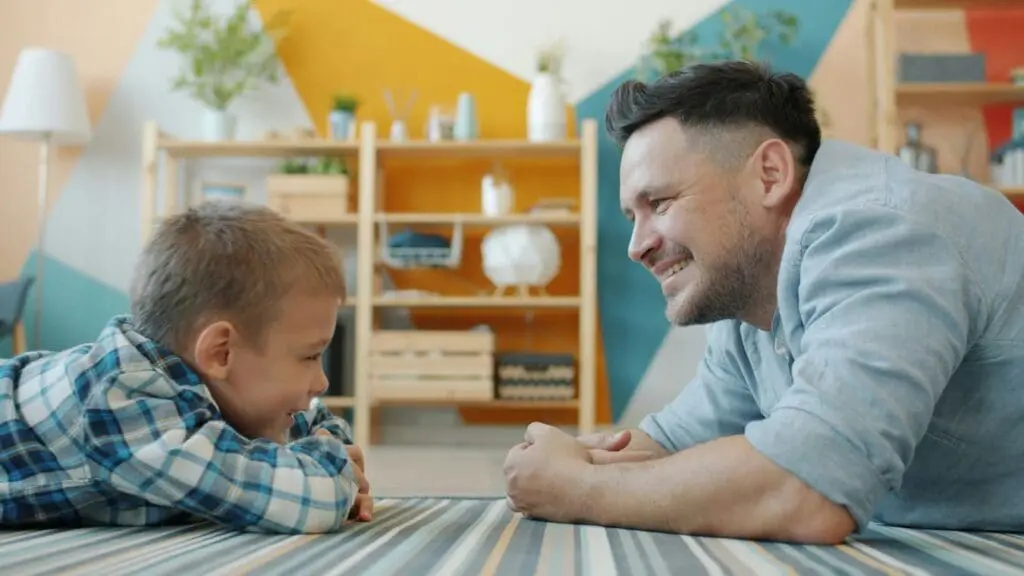
3. Prioritize Presence Over Perfection: The anecdote beautifully illustrates how “being with” a child, figuratively and literally, is crucial. If a parent allows for emotional disengagement when conflict arises, they reinforce the child’s ability to avoid vulnerability and learn to manage complex social situations. Emotional availability, valuing simple presence, is the core of building authentic connections with children.
If you are struggling to move past chronic tension in your parenting or co-parenting partnership, our therapists specialize in building authentic, emotionally present connections with children and navigating relationship dynamics.
Book your free consult call today to start creating new, healthy reinforcement patterns for your family.